For a pesticide or fertilizer dealer in Pakistan, the real business cycle is not daily — it is seasonal. Farmers buy seed, fertilizer and sprays throughout Kharif (cotton, rice, maize, sugarcane) and Rabi (wheat), and most pay when the crop is sold. Your cash is tied up for months, while distributors expect their payments on time. The dealer who manages farmer udhaar best is the dealer who survives a bad season.
Why the paper khata fails agri dealers
- Hundreds of small credit sales per farmer over a season are hard to add up correctly
- Different people write in the register, so entries are missed or unclear
- At harvest, the farmer and dealer argue over totals with no clear history
- The owner can't see the total amount owed by all farmers — the most important number in the business
Principles of good farmer credit
1. Every credit sale is recorded at the counter
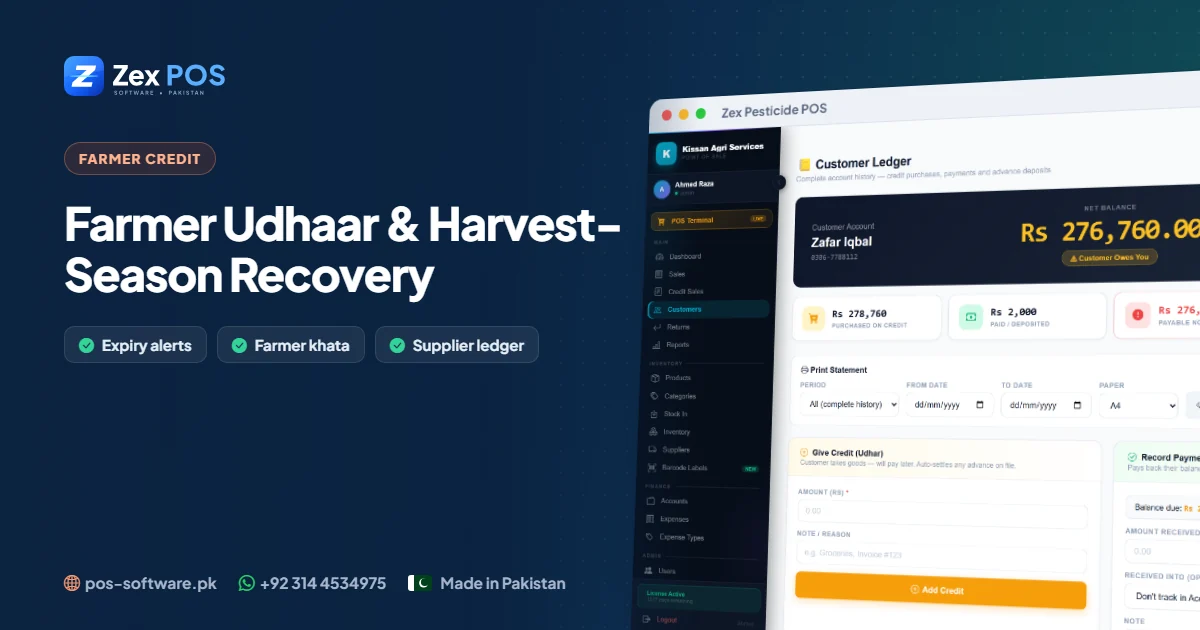
In Zex Pesticide POS, when a bill is finalised on credit it posts directly to the farmer's khata — with date, items and amount. There is no separate step to forget.
2. Notes capture the promise
Add a note to the entry: "payment after wheat harvest", "half after cotton picking", or the guarantor's name. At settlement time, the agreement is in front of both of you.
3. Part payments are welcome — and recorded
Farmers often pay in parts when they sell some produce or receive money from elsewhere. Record every payment immediately so the balance is always correct.
4. Statements end disputes
Print a khata statement for any period — the full Kharif season, the Rabi season or the whole year. A clear list of dates, products and payments settles most questions in minutes and keeps the relationship friendly.
A season-by-season recovery plan
| When | What to do |
|---|---|
| Start of season | Review each farmer's previous balance. Set a credit limit for the season based on land, crop and payment history. |
| During the season | Bill every credit sale through the software. Collect part payments whenever possible. |
| 4–6 weeks before harvest | Print statements for farmers with the largest balances. Share them so there are no surprises. |
| Harvest | Visit or call according to the receivables list, largest and oldest balances first. Record payments the same day. |
| After harvest | Carry remaining balances forward with a note. Use this history to set next season's limits. |
Know your total receivables
The single most useful number for an agri dealer is total receivables — the sum owed by all farmers. Compare it with what you owe distributors in the supplier ledger. If receivables keep growing faster than sales, it is time to tighten credit before the next season.
Balance farmer credit with supplier payments
Your distributors are also giving you credit. Record each purchase invoice and the part-payments you make against it. When harvest money comes in from farmers, you can plan exactly how much to pay each supplier — and print their ledger for the settlement meeting.
Keep cash, bank and wallets separate
Farmers increasingly pay through bank transfers and mobile wallets. Separate accounts — cash, bank, JazzCash — with their own statements make it easy to see where every recovery went.
Frequently asked questions
Can I print a farmer's statement for one season only?
Yes. Choose the date range — for example the Kharif months — and print.
Can I add a note about when the farmer will pay?
Yes. Notes can be added to khata entries.
Does it work without internet in a village shop?
Yes. Zex Pesticide POS is an offline Windows application.
Start this season
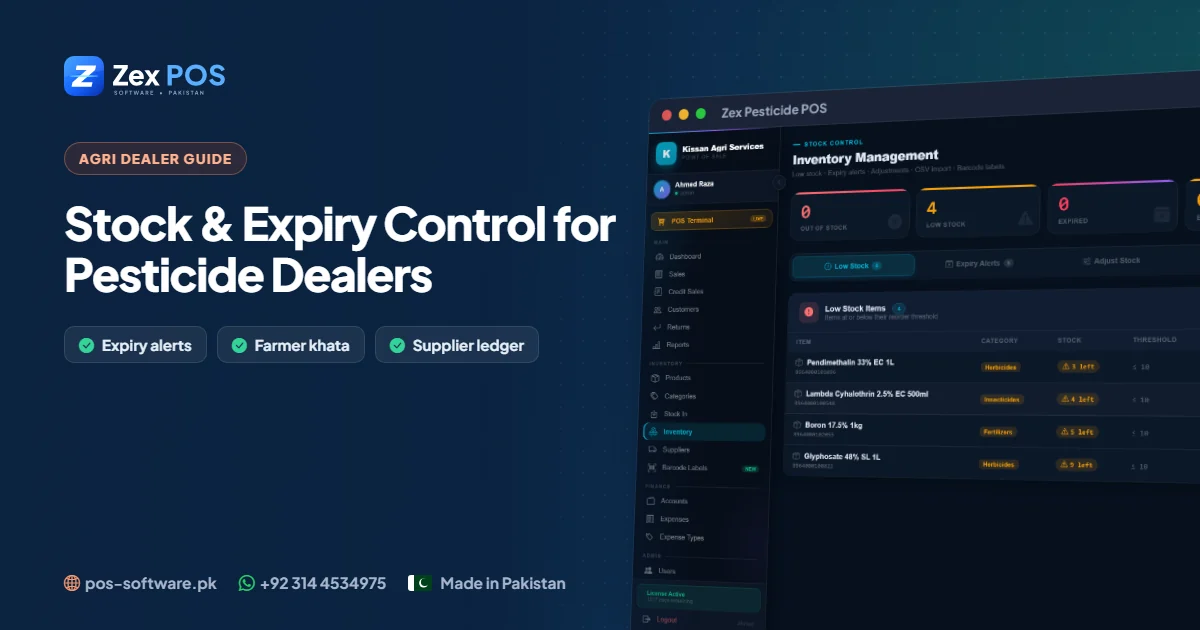
Read our guide on controlling stock and expiry as a pesticide dealer, or message us on WhatsApp for a free demo.
Waqas Ali
Waqas ALi
My name is Waqas ali im currently working as software developer in different Field